
SEASONAL TRAVEL GUIDE TO VISITING MOUNT RAINIER NATIONAL PARK
Visiting Mount Rainier in Each Season
Written by Mark Dahl | updated May 18, 2025
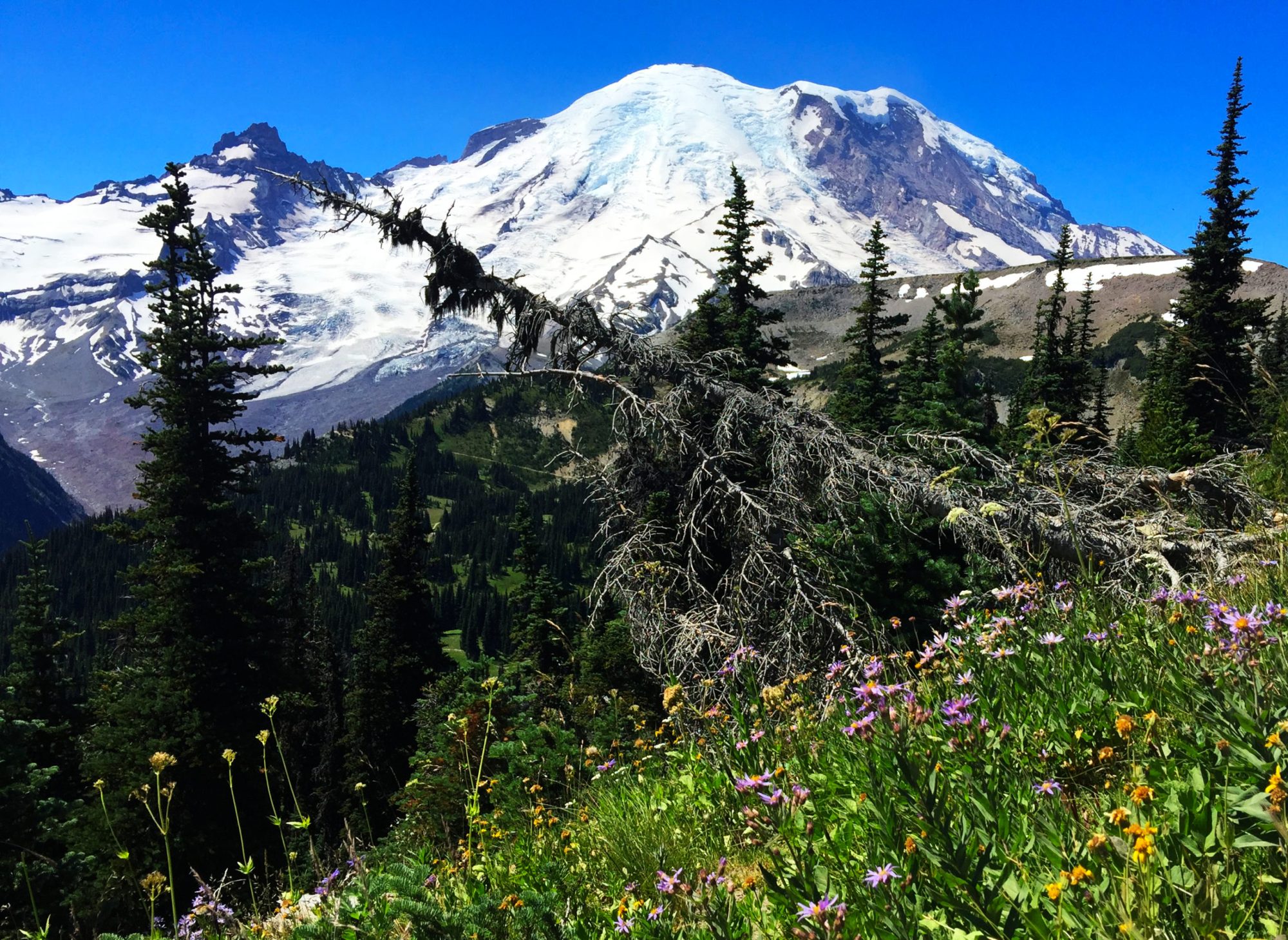
When is the best time to visit Mount Rainier National Park? Late July through September, if you want the whole park open and your best odds of actually seeing the mountain. Every other season has its own case to make, and the right answer depends on whether you’re chasing wildflowers, solitude, snow, or a guaranteed view.
Mount Rainier is one of the most popular day trips from Seattle, but despite its proximity, visitors must be prepared for dramatic seasonal changes compared to the relatively temperate city. Sometimes, you even get to experience multiple seasons in a single day
About 70 miles from Seattle, as the crow flies, Mount Rainier’s 14, 411 feet tower above the horizon. Easily visible from the city on a clear day, the mountain beckons visitors to venture out to explore the national park, which surrounds this glacier-covered behemoth. As a tour guide who leads hundreds of these people through the national park every year, we can tell you they are often surprised by the conditions they find in the park. This is especially apparent when we ascend to the area of the park called Paradise, which at 5,400 feet is the highest elevation we reach by bus on our tours. You can hike up higher if you’re feeling ambitious, but we don’t force you.
What to Expect When Visiting Mount Rainier

Conditions on the mountain can turn on a dime, so the single most useful habit is checking before you drive. Below I’ll share general expectations and tips for each time of year, along with the resources we actually use to see what we’re dealing with before heading out with a tour group. I’d recommend you use the same ones:
- NPS road status for what’s open and what’s gated
- NPS webcams for whether the mountain is actually visible from Paradise
- Current conditions and alerts for closures, construction, and advisories
One note that applies year-round: Mount Rainier is not using a timed-entry reservation system in 2026, so no advance permit is needed to enter the park. You still pay the standard entrance fee, and the park is cashless.
Visiting Mount Rainier in the Winter
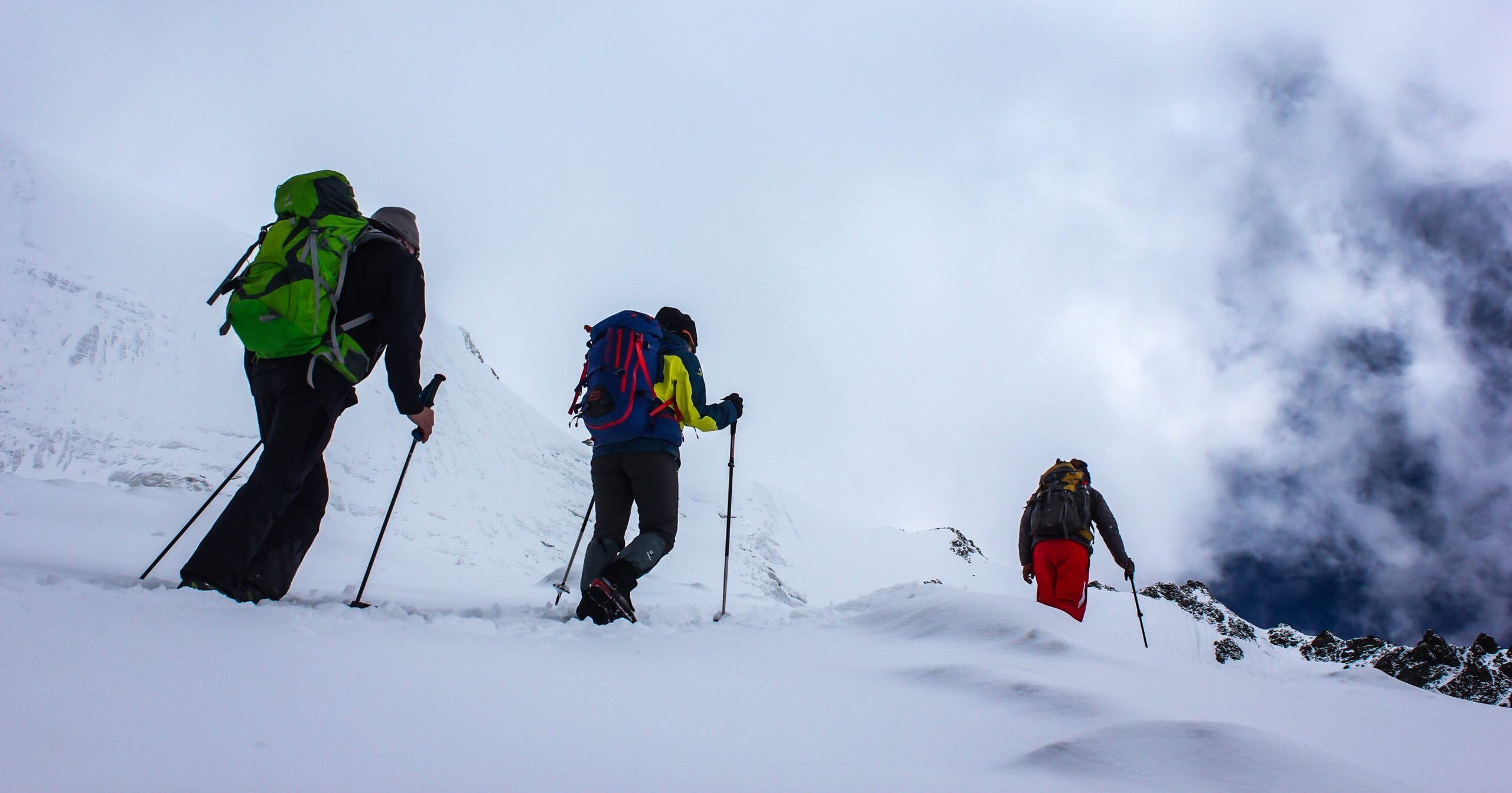
Winter is the best season for solitude, and the most limited season for access. Only the Nisqually Entrance in the southwest corner is open to vehicles, and the road goes as far as Paradise. Everything else, including Sunrise, Stevens Canyon, and the Chinook and Cayuse passes, is closed by snow. Unless you’re on snowshoes or cross-country skis, there’s only so much of the park you’ll see.
Given how rare snowfall is in the lowlands around Seattle, people are often shocked by how much falls in a park this close to the city. Elevation makes the difference. How much snow? Enough to make Paradise one of the snowiest measured places on Earth. According to the National Park Service, the long-term average at the Paradise weather station is about 639 inches per year, or roughly 53 feet, and the single-season record of 1,122 inches set in 1971 to 1972 stood as a world record.
What to know before driving to Paradise in winter
- Chains are mandatory. You’re required to carry tire chains in the park from November 1 to May 1, regardless of the weather that day, and you may still want them outside that window.
- The gate above Longmire closes at night. The road from Longmire up to Paradise typically closes each evening through the winter and reopens in the morning once plows have cleared it, so a winter visit is a daylight activity. Check the road status page the morning you go.
- Go on a weekday if you can. Paradise is quiet by summer standards, but sunny winter weekends still draw a snowshoeing crowd.
- Dress for it. Waterproof boots, layers, and sunglasses. Fresh snow is blinding on a clear day.
Our private Mount Rainier tour runs year-round and includes snowshoes at no charge in winter, which is the easiest way to do a snow day without owning any gear.
Visiting Mount Rainier in the Spring
Spring at Mount Rainier is still winter at Paradise. It might technically be spring when we begin running tours in early May, but it takes a long time for that much snow to melt. It’s not unusual to find snow on the ground at Paradise well into June, or even July in a heavy year.
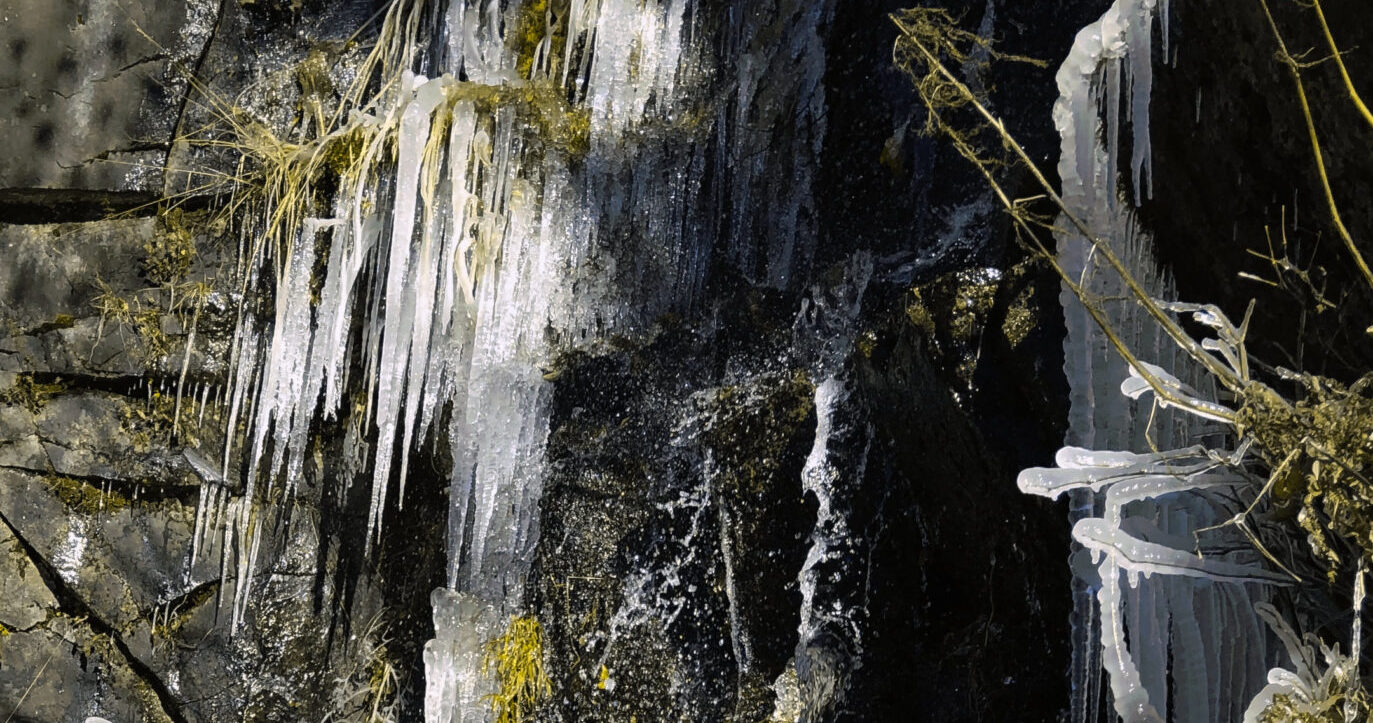
That’s not a reason to skip it. The ice formations are remarkable sculptures in their own right, and as they melt they create spontaneous waterfalls that only exist during this transitional season. Lower elevations green up much earlier, so the forest along the Nisqually to Longmire stretch feels like actual spring while Paradise is still buried.
If you’re determined to see the mountain, check the NPS webcams for the view from Paradise before you leave. Visibility is hit or miss this time of year, and the view from Seattle can be deceptive. For one thing, you’re looking at the opposite side of the mountain. For another, even minimal-looking cloud cover from the city can mean you arrive at Paradise inside that cloud, unable to see five feet in front of you.
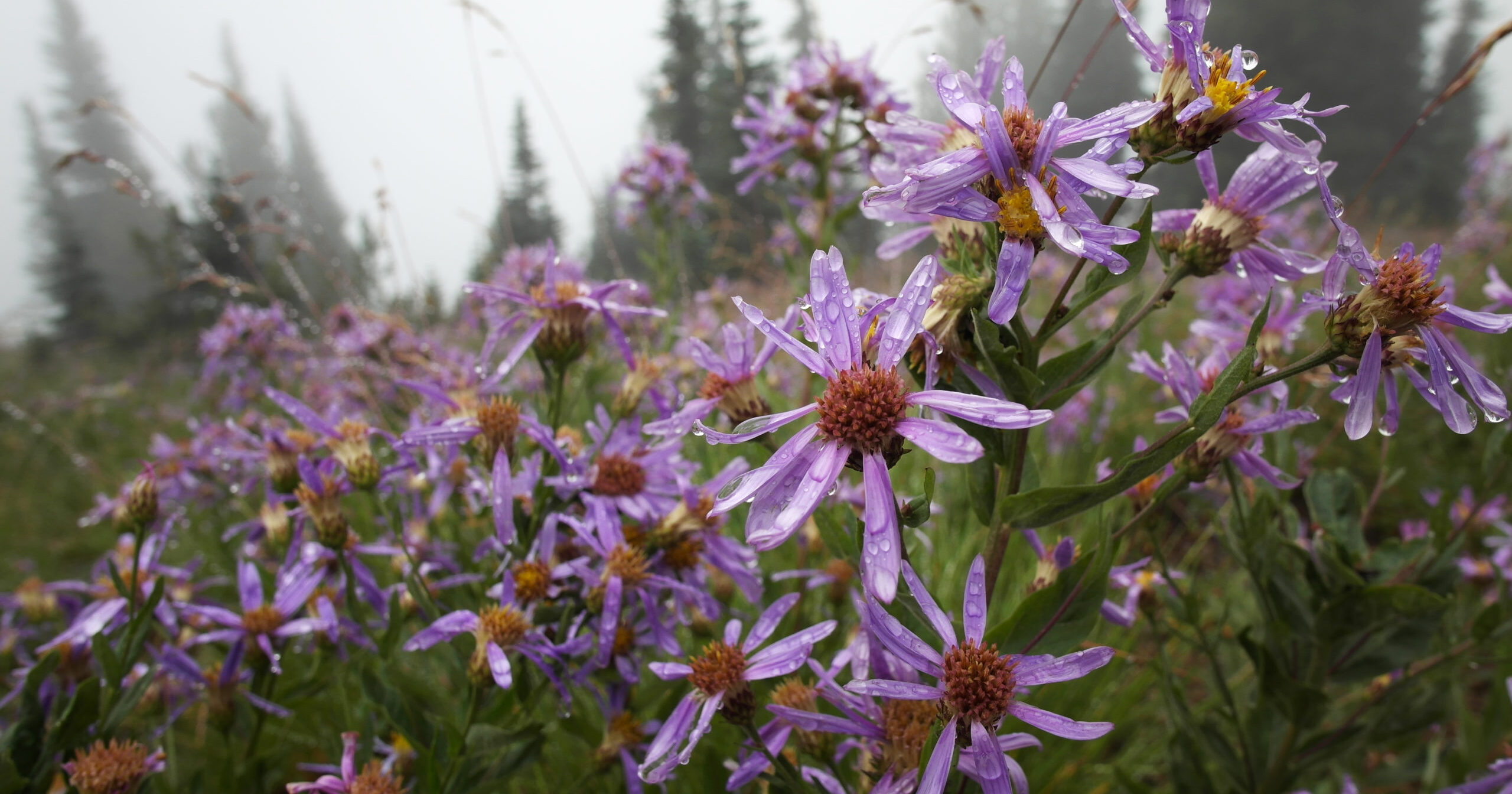
Even when the mountain is fogged in, the park is still spectacular. If you want to hike, focus on lower-elevation trails where the tread is more likely to be clear.
Considerations for Visiting Mount Rainier in the Spring
Wear your most comfortable shoes, preferably with good traction, ideally waterproof boots. This advice applies whenever you visit, but it’s especially important as the snow melts and leaves trails muddy. It’s also common to think the snow has melted off at the trailhead, only to hit snowy patches deeper into the woods and wish you’d worn something waterproof.
Bring sunblock, especially in late spring. We carry it on tours for guests because so many people don’t realize how sunny it gets up there, and reflection off the snow makes sunburn much more likely. You can experience a strange cognitive dissonance in June, walking across a snowfield while sweating.
Visiting Mount Rainier in the Summer
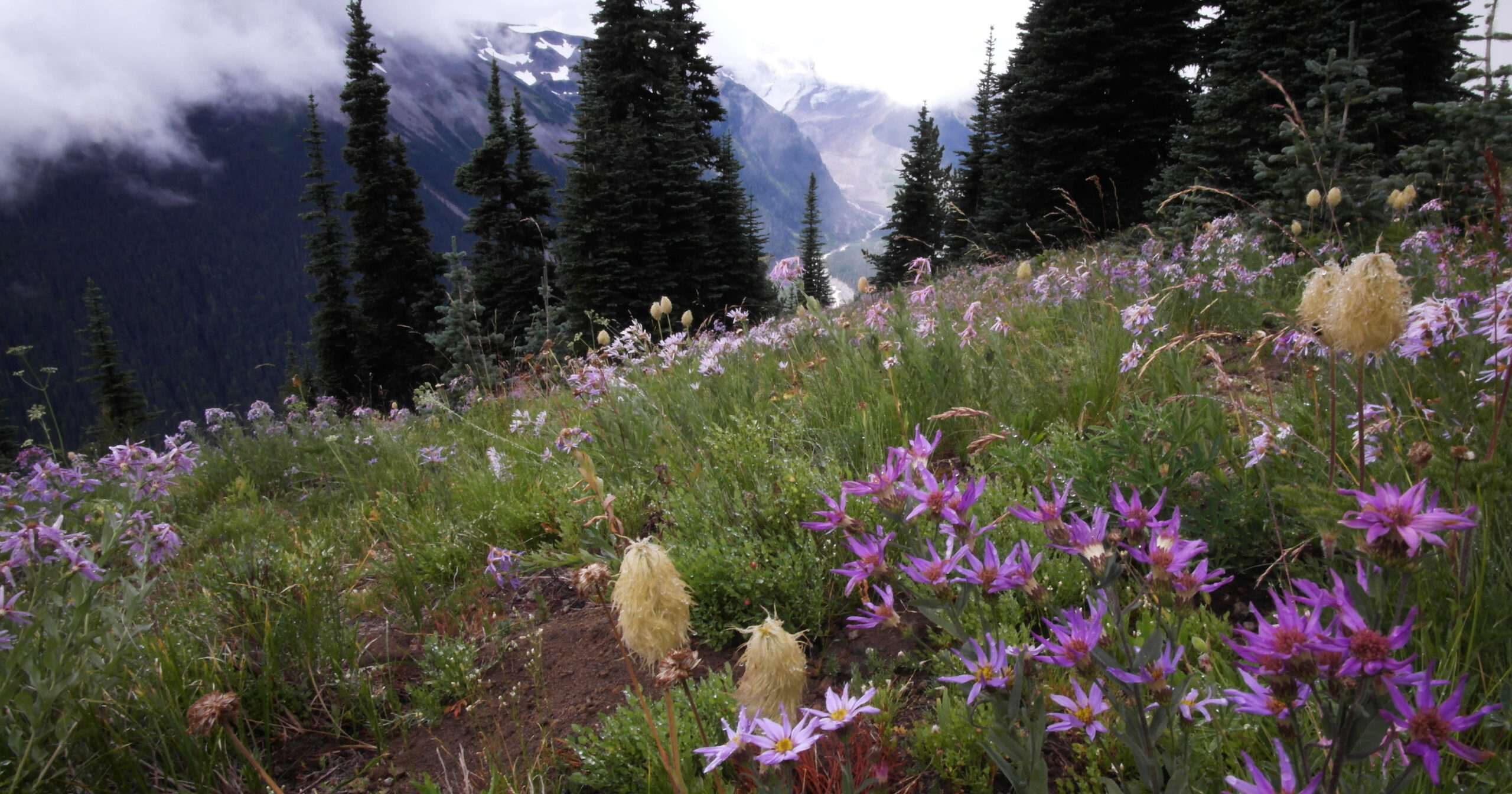
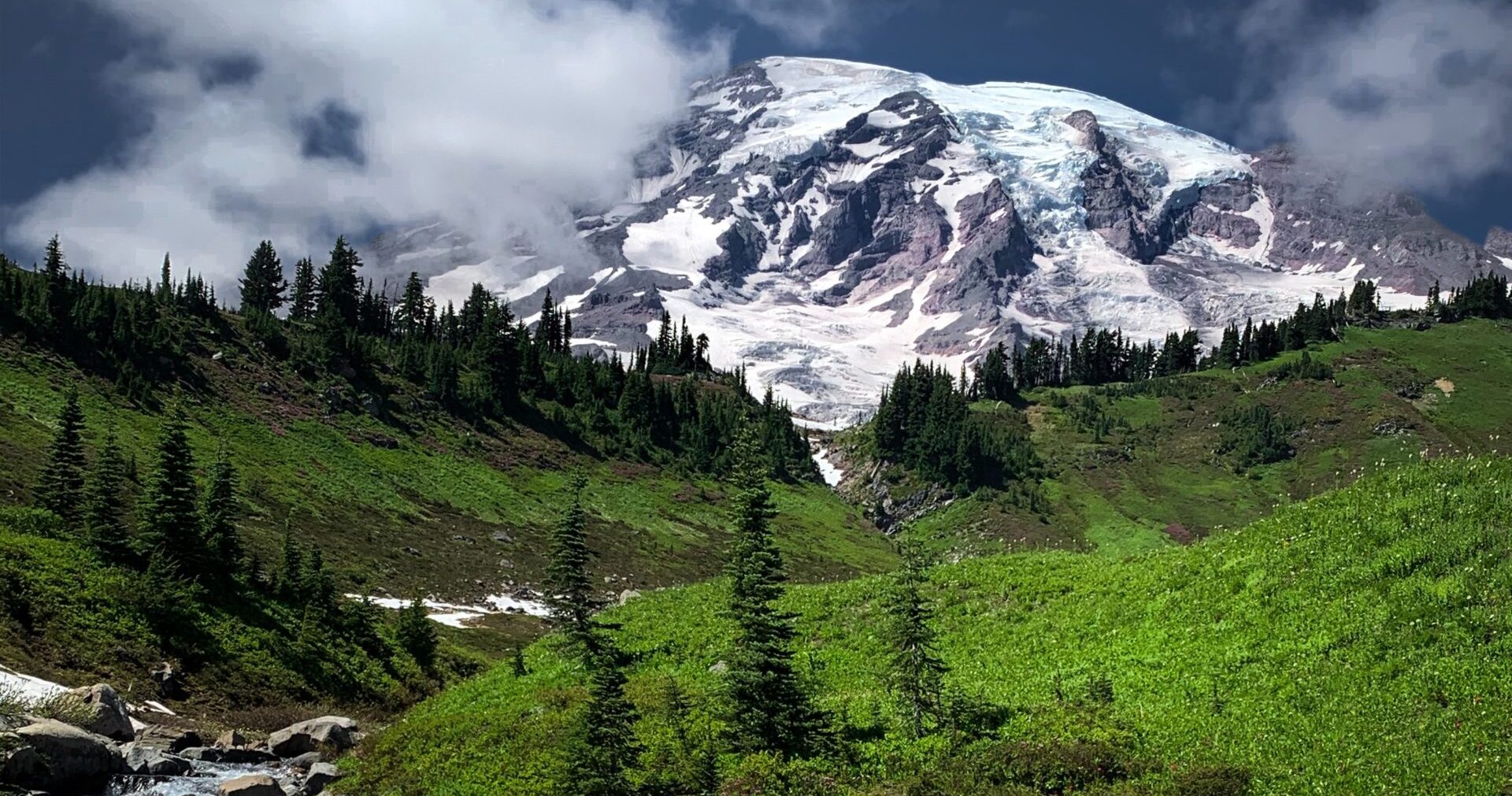
Summer is when the whole park is finally open, and when it’s most crowded. July and August are the most popular months to visit, which makes sense. Once the snow melts, the meadows of Paradise erupt into the wildflower displays they’re famous for, and which gave Paradise its name. These are also the driest months, with the best odds of a clear view of the summit. Nothing is guaranteed, of course. You can absolutely get fogged in during July.
Summer is also the only time the road to Sunrise is open. At 6,200 feet, it’s the highest point you can drive to in the park. The road typically opens in late June or early July and closes by mid-October, sometimes earlier with the first heavy snow.
When do the wildflowers peak at Mount Rainier?
Peak bloom at Paradise usually lands somewhere between late July and mid-August, but it’s driven entirely by snowmelt rather than the calendar. A heavy snow year pushes the bloom later, and a light one can bring it forward into mid-July. The window itself is short, often just two to three weeks. Checking the park’s current conditions page before you commit to a date is worth the two minutes.
How to handle the summer crowds
Crowds are the biggest downside of a summer visit. The National Park Service reports that roughly 70 percent of the park’s annual visits happen between July and September, and the park has drawn between 1.1 and 1.7 million visits a year since 2013. That’s a lot of people funneled through a handful of entrance stations in a short window. Four things help:
- Start very early. Our tours aim to leave Seattle a little after 7 a.m., and that’s deliberate.
- Avoid weekends if your schedule has any flexibility at all.
- Check the line before you go. The park’s X account and Google Business Profile usually post when the entrance backup is especially bad.
- Consider a different entrance. Summer is when all the roads are typically open, which means you can enter through the Stevens Canyon gate, usually far less busy, and leave through Nisqually, waving smugly at the miles-long line of cars waiting to get in.
Visiting Mount Rainier in the Fall (September to mid-October)
Early fall is the sweet spot, and it’s brief. For a few weeks after Labor Day you get the best combination the park offers:
- Kids are back in school, so crowds thin noticeably
- Temperatures are cooler, but skies are often still clear for summit views
- All of the roads through the park are usually still open
This is our favorite time to visit, and we’re a little reluctant to share the secret at the risk of further crowding.
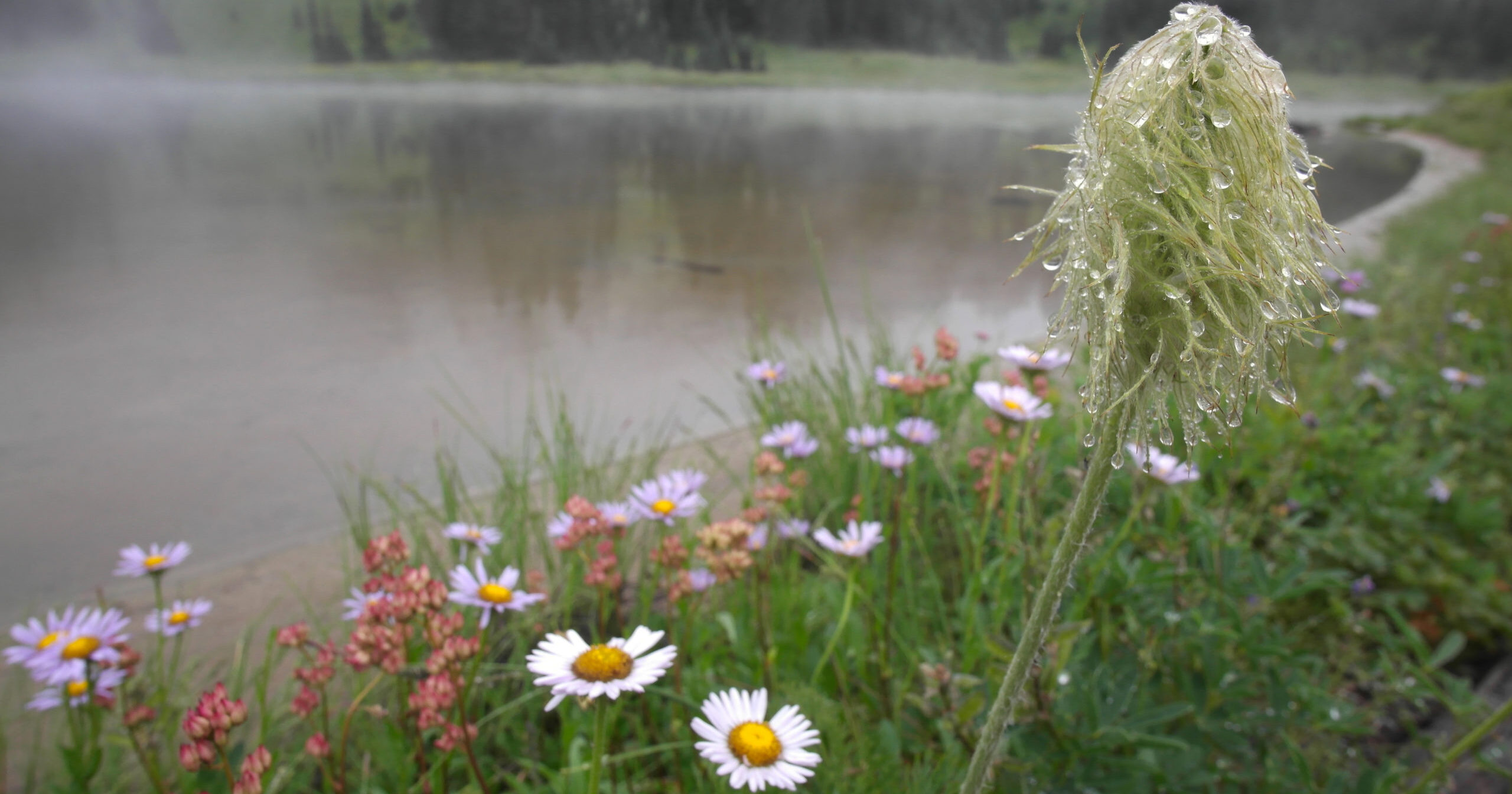
Fall color is a bonus most people don’t expect from an evergreen forest. The subalpine huckleberry that carpets the meadows around Paradise and Tipsoo Lake turns deep red and orange, usually from late September into mid-October, and vine maple lights up the lower elevations.
Remember how short this window is. By mid-October, and sometimes earlier, snow factors into your plans again: roads start closing, chains come back into play, and Sunrise shuts down for the season. Check the NPS webcams and advisories before heading out.
None of this is meant to talk you out of a visit, unless it’s one of the busiest summer days, in which case feel free to be dissuaded. Even on tours where every variable worked against us, people still have an amazing time. Mount Rainier is just that incredible.
Visiting Mount Rainier National Park is Easy
We would, of course, love it if you would join us on one of our Mount Rainier tours from Seattle, in which case we can take care of all the details and you just have to show up wearing comfortable shoes. Not to belabor that point, but you would be amazed at how many people cause themselves misery by wearing inappropriate clothes and shoes.
If going on your own is the better fit, no timed-entry reservation is required in 2026, so you can simply drive to an entrance station and pay the fee. Check Visit Rainier for more helpful info ahead of your trip!
Don’t forget to make reservations for more trip-planning information, and read our Mount Rainier day trip guide for drive times, routes, packing lists, and a sample one-day itinerary.
Whether you go with us or on your own, I hope these tips from someone who’s spent more time in the park than most prepare you for an amazing journey.
Private Tours Make Visiting Mount Rainier Even Easier
If you want a personalized, flexible way to experience Mount Rainier, consider our Private Mt. Rainier Tour. Perfect for families, couples, or anyone looking to explore at their own pace, this 10-hour experience includes hotel pickup in a comfortable Chevrolet Suburban LTZ and a local expert to guide your day.
- Hike as much or as little as you want
- Choose the Paradise or Sunrise visitor centers, weather permitting
- Visit Narada Falls, Reflection Lake, Lake Tipsoo, Christine Falls, and more
- Snowshoes provided in winter
- November to April discounts available
You’ll see places our public tours don’t reach and enjoy professional, friendly service from start to finish. It’s one of the most relaxing and immersive ways to experience Mount Rainier.
Frequently Asked Questions
- When is the best time to see the wildflowers at Mount Rainier?
- September is the best all-around month for most visitors. Roads are still open, summer crowds have thinned after Labor Day, and skies are often clear. August offers the most reliable trail access and peak wildflowers but the heaviest crowds, while July can still have snow on high trails in a heavy year.
- When is the best time to see the wildflowers at Mount Rainier?
- Peak bloom in the Paradise meadows typically falls between late July and mid-August, though the timing depends on snowmelt rather than the date. Heavy snow years push it later. The peak window is short, often only two to three weeks, so check current conditions before locking in a date.
- When is the quietest time to visit Mount Rainier without sacrificing road accessibility?
- September through early October. Crowds drop off once school resumes, skies are generally clear enough for summit views, and all major park roads are usually still open before the first significant snow in mid-October.
- Do I need snow chains to drive in Mount Rainier National Park in the winter?
- Yes. All vehicles are required to carry tire chains in the park from November 1 to May 1, regardless of the conditions on the day you visit. Chains may also be useful outside that window depending on snowpack, so check NPS road advisories before you go.
- Can you visit Mount Rainier in the winter?
- Yes, but only part of it. The Nisqually Entrance in the southwest corner stays open year-round, with the road running as far as Paradise. The rest of the park, including Sunrise and Stevens Canyon Road, is closed by snow. The gate above Longmire typically closes overnight, so plan a winter visit as a daytime trip and check road status that morning.
- When does the road to Sunrise open in Mount Rainier National Park?
- Sunrise Road typically opens in late June or early July, depending on how quickly the snow clears, and closes by mid-October or earlier with the first heavy snowfall. It’s the highest point you can reach by car in the park at 6,200 feet, and it’s only an option for a narrow slice of the year.